
2026 10 15
Heavy Talks: Lijundra and How Nature Is Trve Kvlt
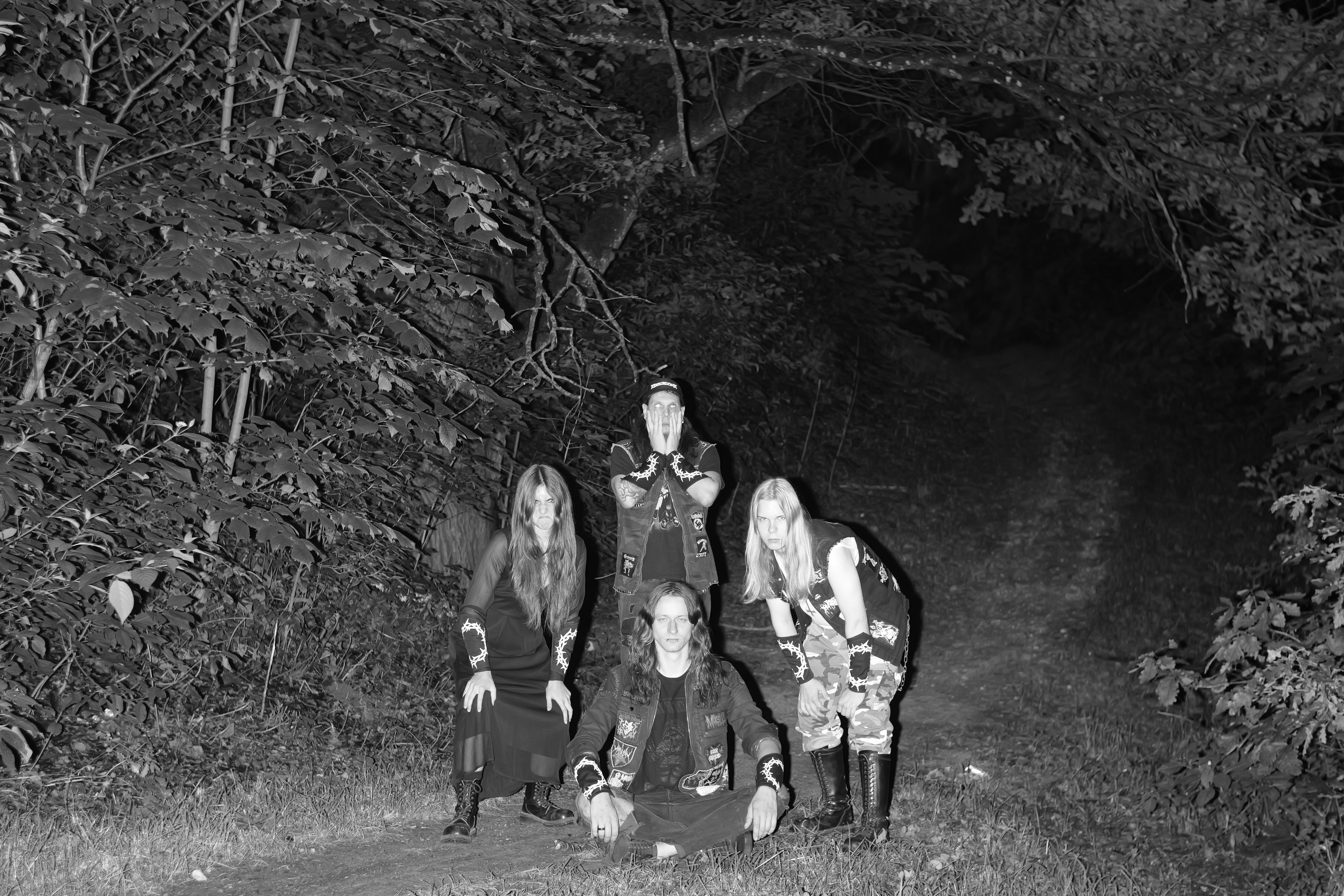
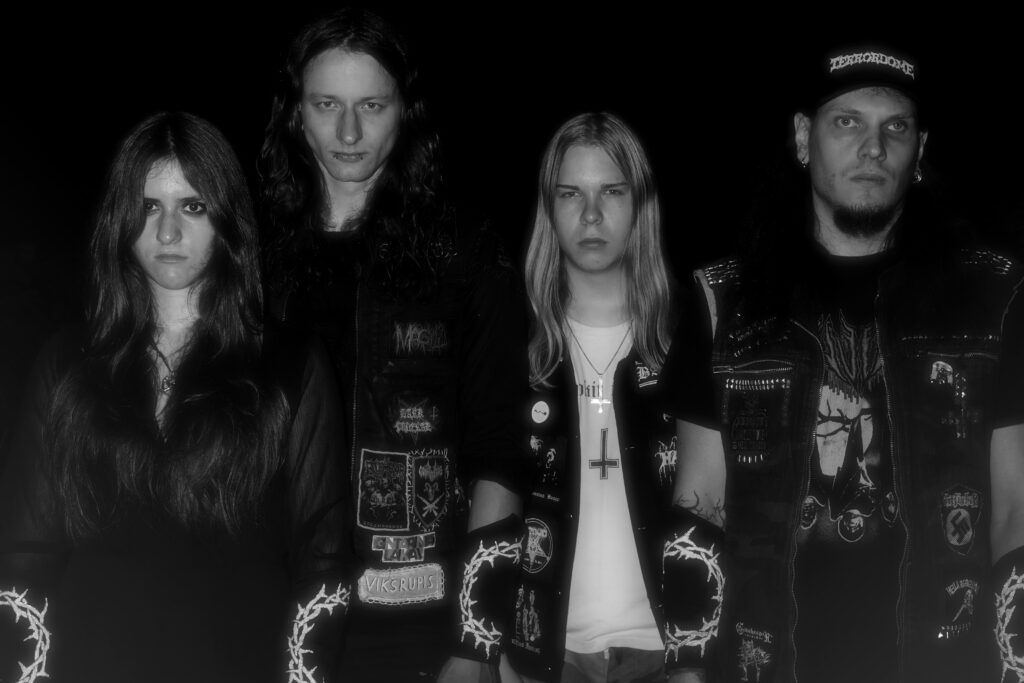
Two years, one bassist, one vocalist, and one drummer later, the Vilnius black metallers Lijundra are about to release their debut album. I sat down with musicians Eva and Matas to talk about how they got here.
Let’s start with the casualty list. Lijundra has gone through more line-up changes than some bands go through albums. How did this thing actually begin?
Eva: So basically the band was founded by me and Liepa, our previous bassist. I’d been thinking about starting a band for a while, and Liepa just went, why don’t we start a band? So we did. That was 13 January 2024. At first it was just the two of us, me on guitar, her on bass, trying to write songs. Liepa was pretty new to the bass, so it was a bit of a challenge for her to adapt quickly. At the same time we were looking for members. That summer we were hanging posters around Vilnius Old Town, and hardrock.lt noticed them, shared our poster on Facebook and spread the word that there’s this new band, Lijundra, looking for people. After the summer, in September, Matas joined. He was hired as lead guitarist, but he also knew how to play drums, so he ended up being our drummer for about a year.
Matas: Yeah, for at least half a year I was more of a drummer than a guitarist.
Eva: And while Matas was on drums, we wrote most of the first album. “Sąžinė Tamsi” was one of the very first tracks we wrote. We didn’t have a full line-up, but we were already writing. A couple of months later we brought in Tomas, our previous vocalist, and in January 2025 we found a drummer, Daniil, stage name 107. So there were five of us: me, Liepa, Matas, Tomas and 107. First gig in March 2025, then quite a lot of concerts after that. At the end of the summer our drummer left, and about a month later we found Kasparas, who also plays in Magyla, Tuurngait, and Shvininiai Sharvai.
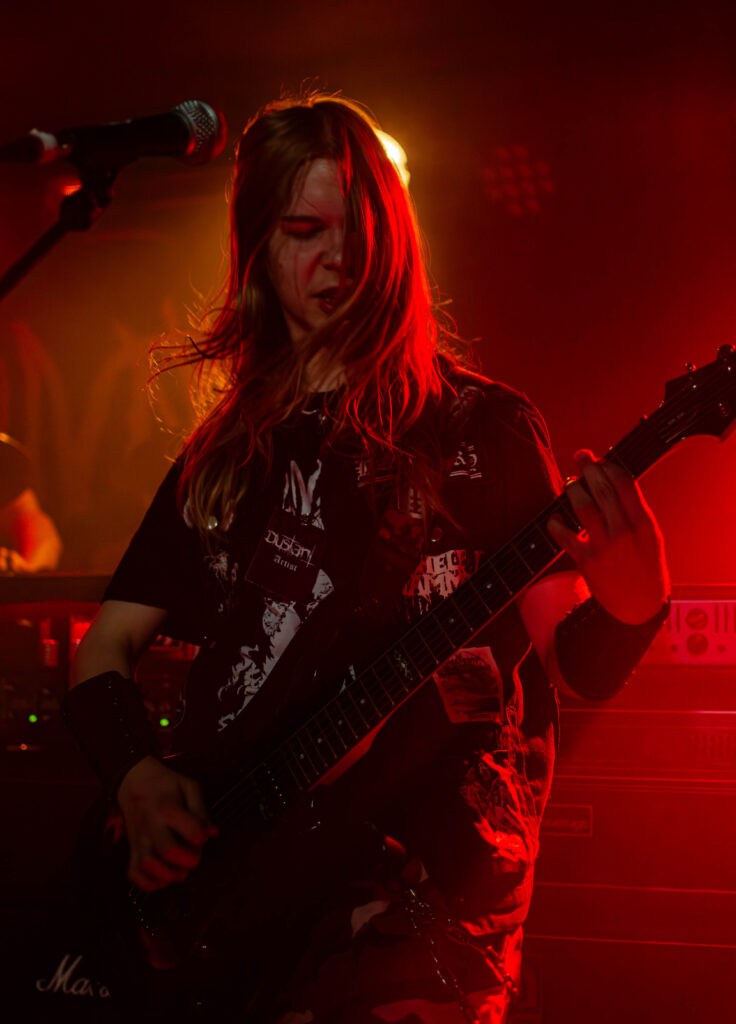
Matas: When our drummer left we had two gigs lined up, so we were desperate. We found Kasparas within a month.
A month? You’re not exactly playing lullabies. How does someone learn your set that fast?
Matas: Kasparas is a beast. Simple as that. He looked at the drum tabs and was like, “Eeh, it ain’t that hard, I just have to keep count, play it through a couple of times, and I’m good to go.”
Eva: Yeah, Kasparas is really talented. So we settled into that line-up, and then in January 2026 things changed again because Liepa left the band for personal reasons. Finding a bassist took a while.
Matas: Like three months.
Eva: We weren’t as lucky that time. Nobody in our circle of friends could join. But then we found Stiklas (who’s also a member of gangrena and the Thundercocks).
Matas: He just slid into my DMs like, “Yo, you still looking for a bassist?” I said yeah. And he goes, “Okay, lemme give it a shot.”
Eva: And he fit right in. Stiklas brought a different kind of energy, more thrash-oriented, which I really appreciate.
No audition? He just turned up, jammed, and he was in?
Eva: Pretty much. We knew after the first rehearsal he’d be a permanent member. We played about three concerts with him, and then split our ways with Tomas because of creative differences.
And that’s when you two picked up the microphones.
Eva: Yeah, that’s when Matas and I became the vocalists.
Matas: We decided we didn’t want to look for another person again. Auditions, waiting for someone to learn the lyrics, it’s too much hassle. So let’s just do it ourselves and split the duties.
Black metal vocals are brutal on the throat if you do them wrong. Was it a rough transition?
Eva: Yeah, it took time to get the technique down. I’ve only been a vocalist for a couple of months, so I’m still learning. The hardest part is singing and playing guitar at the same time. Sometimes it feels like my fingers don’t listen, and on top of that I have to manage my breathing so I don’t get gassed out. But I’m managing alright now.
Who taught you? A coach? YouTube?
Eva: I did watch a lot of YouTube tutorials, but the person who helped me most was Herkus from Räzorkült and Carrion Epoch.
Matas: I also play in Räzorkült.
Eva: Yeah, and I also play in Carrion Epoch. So that same Herkus gave me the introductory basics and helped me a lot. Shoutout to Herkus.
Were you always a black metal band?
Eva: In the very beginning, when it was just me and Liepa, we were planning to play death metal, but we drifted toward black metal. We were also trying to figure out what to call ourselves, and eventually we decided, let’s just play whatever we can manage to play. And somehow that was black metal.
Matas: Basically anything with black metal at its core. Some tracks lean more toward doom, others toward death metal. There are lots of breadcrumbs from other styles.
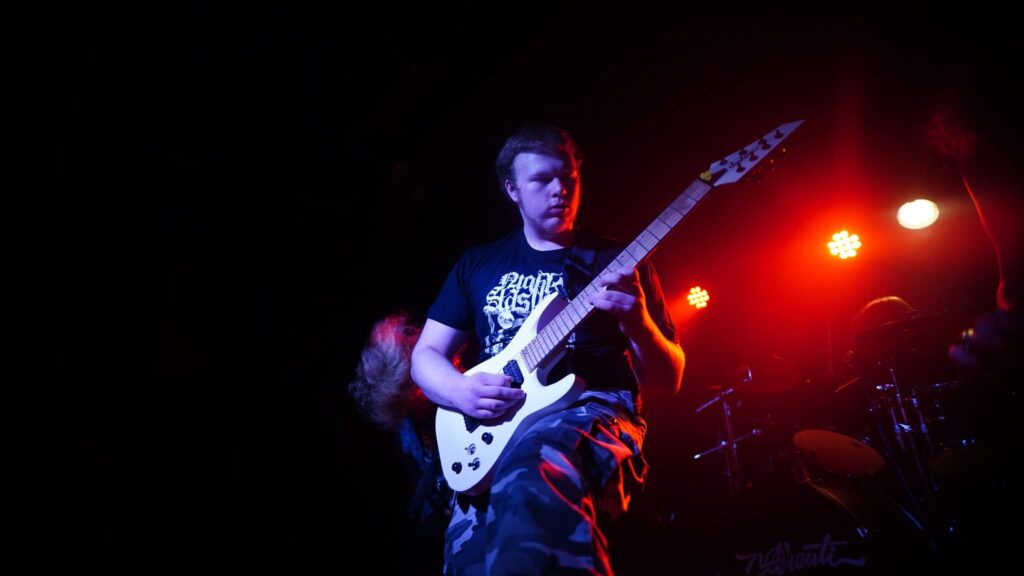
“Whatever we can manage” usually ends in three-chord punk. How the hell do you land on one of the most technically demanding genres there is?
Eva: I dunno. At the time, I was listening to a lot of black metal, and the artists I listen to most find their way into what I make. So if I’m listening to loads of black metal, naturally I’ll be writing black metal. Sometimes I’ll play one album on repeat for a month, and then my own songs end up with all the traits of whatever I’ve been listening to.
So what was on repeat when Lijundra started?
Eva: My biggest inspiration was Immortal, and to this day I love their riffs. Other black metal bands too, like Marduk, and Darkthrone, especially their album Arctic Thunder. For a while, I was really into speed and thrash, and now I really dig Chuck Schuldiner’s Death. So it’s all those influences merging in Lijundra.
When I first saw the cover of your debut single, “Mėnulio Aušra”, I thought of Mayhem. The purple, the church spires.
Eva: I have listened to Mayhem, but no. The church was a deliberate choice. It’s St. Anne’s. The first time I met Liepa, a mutual friend introduced us, and we were walking around the Old Town and stopped near St. Anne’s and started talking about the band. We took some photos there. I see that church as a kind of symbol of where Lijundra started, so I really wanted it on our first single. The purple was Matas’s idea.
Matas: Yeah, that was me. The whole story is that I wrote in the band chat, “It’d be cool to pick one shade of purple and make it our signature colour.” Everyone was kinda on board. And that was it. There was no master plan, just one sentence in a group chat.
Then let’s settle the obvious one. Why “Lijundra”?
Matas: When we were changing our band name, I messaged a friend: “Yo, help me out, I can’t think of a name.” She replied with one word: “Lijundra.” And I thought, damn, that’s tuff. I sent it to the group chat, and they were all like, damn, that’s tuff.
A good name tells the listener what they’re in for. What does this one tell them?
Eva: What I like about it is that it reflects our music. It’s black metal, but with elements from other genres, the same way lijundra (the Lithuanian word for freezing rain) is made of water and frozen pellets at the same time. It’s wild and unpredictable.
Matas: Yeah, the name has this undefinedness to it, and I think that really suits our music.
Let’s talk about Dangaus akis. One single, a demo, and now a full album. That’s a big step.
Eva: Yeah. We released “Mėnulio Aušra”, and when we played the Šerną tūsas festival in 2025 we were selling demo CDs, which were also sold at Ragainė. So it’s a significant milestone. After two years, we can finally release an album. It took this long because of all the line-up changes. It takes a while to find someone, then a while for them to learn the songs, and there was a lot of back and forth. But now we have it. It comes out on 24 October at midnight.
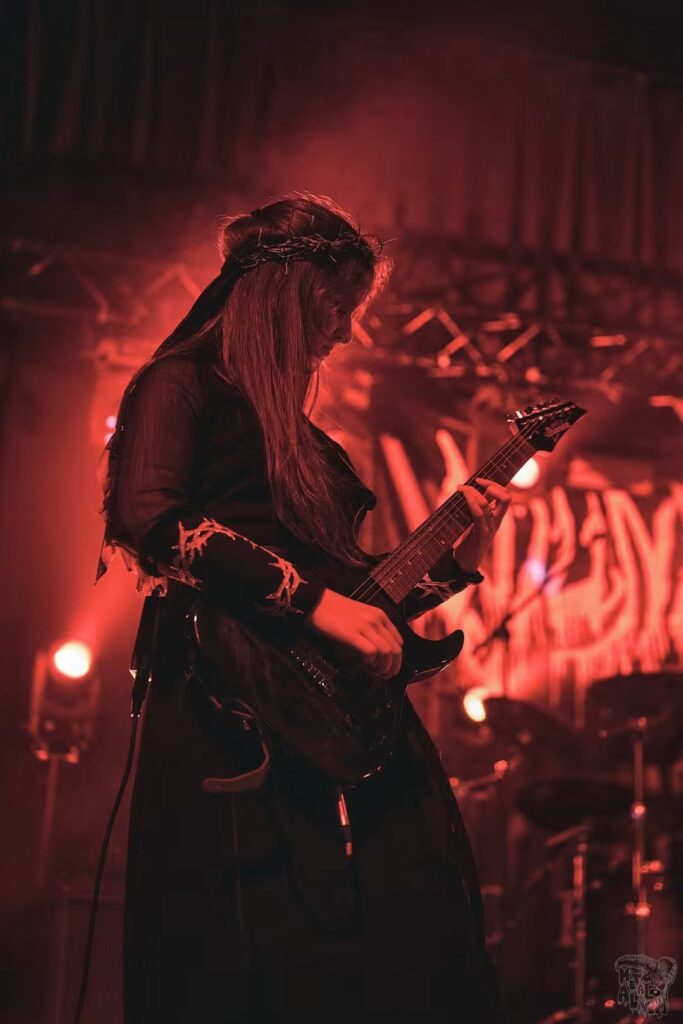
Kasparas has made records before. For the rest of you, this was new territory.
Matas: Yeah, Kasparas is the most experienced. He recorded about two albums with Magyla and a lot of material with Shvininiai Sharvai. Technically, I have some experience from my solo projects, but that’s not the same as making a whole album with a band.
So how did it actually work? Where did you record?
Eva: Herkus helped a great deal again. He’ll be credited on our physical CDs. He recorded the drums, the guitars, the whole thing, because he knows a lot about recording, and he was so patient. We’re incredibly grateful, because we’re really happy with the result. We recorded in our space at Spaudos rūmai, where we rehearse.
Matas: Except the vocals. We did those in this very room, where we’re talking right now.
Is polished production even necessary for black metal?
Matas: We’ve never been the kind of band that wants the ugliest sound imaginable, with as little bass as possible, as much treble as possible and shrieking vocals on top. We always wanted a record that’s listenable but not too sterile, something that still has grit.
Eva: With the conditions we had, I think we did well. I don’t think black metal should be sterile, because then it loses its essence, its soul. But I also don’t like it when the music is so buzzy you can’t even tell what you’re listening to. You have to find the sweet spot, the middle ground between those extremes.
Did you track this live in the same room, or record everything separately, instrument by instrument?
Matas: We recorded every instrument separately in Reaper, then sent the multitracks to a friend for mixing. He did the Lord’s work with what we gave him.
Eva: Mixing and mastering was done by Morten from Adra Soundcraft.
How did you find him?
Matas: He’s a friend of ours.
Would you do anything differently next time?
Matas: I’d record everything in one go instead of across sessions, especially guitars and vocals. We had to re-record guitars and vocals three times each. You try to line everything up and realise the whole thing is out of sync, so you redo it. Even the pitch shifted.
Eva: Next time I’d give the drums more time, so Morten wouldn’t have to sit there for hours cutting everything up by hand.
Matas: But he’s just built like that. You can’t change him. However beautiful the recording is, he’ll still sit there for hours.
Eva: And maybe next time, I’d want a slightly colder sound. I feel like the guitars on this album are a bit warm.
I noticed that too. Plenty of bands want to sound like an ice pick to the ear, but I think the warmth suits you.
Matas: We recorded the guitars DI into the audio interface, and Morten used various VST plugins. Most of those plugins are modelled on old tube amps, so I think that’s where the warmth comes from.
Now the lyrics. I’ll be honest, I tried hard to work out what the hell you’re singing about. “Ir tai praeis” is the only one I could really make out. Who writes them?
Eva: I wrote the lyrics for almost every song. The exceptions are “Vienatvės Aidai”, which Matas wrote, and “Soma”, which Tomas wrote.
Walk me through how you write them.
Eva: I just need to sit down in the evening. I put on some music for atmosphere, something that matches how I feel at the time, and for a good 15 minutes I just look out the window and think. Then I start brainstorming, writing down random ideas, phrases, whatever comes to mind, and I try to piece lyrics together from that. I look for the dominant theme. The first album has a lot of mysticism in it, a lot of it drawn from the pagan gods.
Words first, or music first?
Matas: It depends on the track. Sometimes the melody’s already there, sometimes it isn’t.
Eva: Yeah, sometimes I just sit down and write out my thoughts because I need an outlet for my emotions, and I keep those lyrics in an archive. Then when we write a new track, I go through the archive and decide what fits the track’s feel.
And the pagan gods turn up the same way?
Eva: I’m really inspired by Baltic mythology, and I like that you can interpret it in so many ways. The whole aesthetic inspires me. A lot of what inspires me comes from my literature lessons. When I was writing the first album, we were studying mythology in literature class, and it just naturally found its way into the lyrics. What I make, my lyrics especially, is really shaped by whatever’s around me at the time.
Where does that pull toward old Lithuania come from?
Eva: I don’t really remember when it started. As far back as I can remember, I’ve been interested in ancient Lithuania and its religion. I think a big part of it is that I love nature. I spend my summers in the village, and in the evenings I walk in the forest, where I find this special, mystical bond, and that’s what I wanted to put into words.
Then black metal might be the best vessel for it.
Eva: Yeah. All that darkness and all of nature’s diversity can mean so many things.
Your angle is clear. But you’re working in a scene that can get very trve kvlt, with its fundamentalists and its edgelords. How do you survive in that?
Eva: I guess we find the trve kvlt in nature itself. We offer a slightly different idea of what trve kvlt can be, not just shouting “hail Satan”. We want to invite listeners to look a bit deeper. I think about that a lot, and it helps when I’m writing. Our biggest fear was making black metal that sounds exactly like every other band. We want to make something we like ourselves. We’re not being different for the sake of it, but we want to have fun with it, too. We don’t like run-of-the-mill black metal with tremolo picking for the whole track and every song doing the same trick. Genres die when you just blindly repeat the formula. You have to bring something new.
You’ve played a lot of shows, opened for some big names, and you’ve got an album on the way. From inside it, how does the Vilnius metal scene look?
Matas: The scene’s definitely alive, that’s for sure. There are listeners, musicians, and venues. Of course there’s some fragmentation, where people pick one niche of black metal and decide they’re enemies of everyone playing another niche. But it doesn’t feel like a tiny scene where you play the same club every week to the same 15 people. There are always new clubs and new people. We don’t feel stuck, and we get a lot of support from the scene.
Eva: What bugs me is that there aren’t more serious young bands. Especially in black metal, it’s kind of the same bands over and over.
Does a new band actually get enough chances to play live?
Matas: Getting booked honestly wasn’t that hard. If you want to play, you can basically just message Lemmy Club in Kaunas and you’ll get a gig. That’s our advice to new bands: go to Lemmy. They have gigs pretty much every weekend, across all metal subgenres, so you’re bound to fit somewhere as an opener or something. You can even organise the whole night yourself and bring the bands. Same with Narauti. It’s not that there are no venues. You just have to work for it and put in the effort. You’re not going to make an Instagram account and have ten clubs sliding into your DMs asking you to play.
Eva: Yep. You just have to work a lot.
Matas: I’ve noticed this pandemic of Instagram bands. Dozens of black metal bands pop up, post one reel of themselves playing, and then disappear. Young bands need to make an effort. The second you see a poster with “+ support (TBA)“, write to the organisers. If it’s a no, it’s a no. Nobody’s gonna beat you up. If it’s a yes, that’s already a win. Just play your stuff and collect your fans. And don’t be afraid to message other bands. That’s how we got our first gigs: one of us wrote to someone, and we got in.
Eva: If you don’t try, you’ll never know.
I nearly forgot. No corpse paint. Why?
Matas: We don’t want to fit the black metal stereotype where everyone needs corpse paint, blood, and leather bracelets with 50-centimetre spikes.
Eva, live, you wear something on your head.
Eva: That’s my crown of thorns. There was never one specific reason. I picked it because I think it adds to our stage presence, and it looks cool. And I wear the crown because I founded the band. I made it myself, too, and it suits me.
So seeing that you have your stage presence nailed down, have you found your sound yet, or are you still looking?
Eva: The first album is basically us looking for our own sound and figuring out what we want to make. There’s a lot of experimentation on it. A lot of our thinking was, we want this track to sound like that track I heard somewhere, because I like its atmosphere.
Matas: Our sound is always changing. It never stays in one place. It’s seasonal, so to speak.
What’s next?
Matas: Just keep playing. Don’t stop. Keep writing, keep performing, climb as high as we can and don’t come back down.
Eva: Yeah, keep writing new music without stopping, and maybe get a festival slot. Make CDs, cassettes, merch, maybe even play outside the country.
What would you say is the main reason why you’re doing all of this and making this music?
Matas: We’re not in it for the money. We’re just passionate about it. It’s fun to play with other people and to contribute to the scene, to have our own name in it. Music without fun is just a job, you know.
Eva: For me personally, I want to inspire other musicians and bands not to give up and to keep going. If you put in a lot of work and effort, anything’s possible.
Any moments with the audience that stuck with you?
Eva: We’ve had so much support, especially at the start, from hardrock.lt and from Gedas from Audronaša. He’s the best, and he still supports us. He had a blast at our show at Loftas. We value that support a lot because we’re still a young band. I was really nervous before Loftas because it was our biggest show yet. Playing with Obtest is next-level stuff, and we got invited. We were shocked, and it gave us so much motivation to keep going. It wasn’t an easy one, because I’m playing and singing at the same time, so when I walked off stage it was amazing to hear people had a great time. And as a woman I got extra support, because people love seeing a woman on stage in such a male-dominated field. That was completely unexpected. When I started the band, I thought being a girl would make things harder, but somehow people proved me wrong, and there’s been a lot of support.
Last one. What separates good black metal from bad black metal?
Matas: Black metal can be simple and still be good. Sometimes less is more. But if your less is so little that there’s almost nothing to listen to, that’s a problem. It’s no fun when you go to a gig and the first song has blast beats, then the second song has blast beats, then the third song has blast beats. How long before you lose interest? Even how you start a song can make a real difference. There’s room to stand out right there. Just be creative. Same with guitars: borrow something from somewhere else, experiment with the tone, add a cool synth even. Black metal can be a really creative genre, but it’s easier to make shitty black metal than good black metal.
Eva: I think it comes down to taste. It’s hard to put into a formula. But for me, bad black metal is taking the easiest route, not trying to experiment or push past the genre’s conventions, and staying in that corner of keeping traditional black metal exactly as it was. Maybe that’s not “bad”, but I just find it boring.
Lijundra’s debut album, Dangaus akis, comes out at midnight on 24 October on Spotify, YouTube and Apple Music.
Mazūra
Host of Sunkūs Dažniai at estakada99